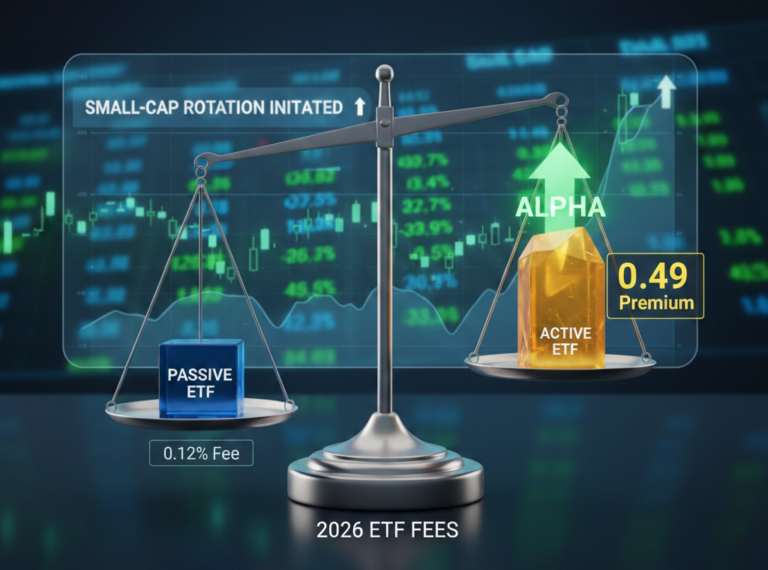
The Strategic Evolution of JuniorBeES: A 2026 Deep-Dive into the Nifty Next 50 Growth Engine
The rise of JuniorBeES within the Indian capital markets represents a significant shift in how retail and institutional investors approach the mid-to-large-cap transition phase of corporate growth. As of March 2026, the Nippon India ETF Nifty Next 50, commercially known as JuniorBeES, has matured into a sophisticated financial instrument that provides granular exposure to the “waiting room” of the blue-chip Nifty 50. While the broader market remains fixated on the stability of the top fifty constituents, the most aggressive alpha generation is increasingly being sourced from the subsequent fifty companies, which serve as the growth engine for modern high-performance portfolios. The performance trajectory of JuniorBeES in early 2026 reflects an economy transitioning from traditional industrial cycles toward diversified, fee-based financial models and renewable energy transitions, capturing a unique segment of the market that exhibits both large-cap resilience and mid-cap agility.
- The Macroeconomic Context of Passive Equities in 2026
- Structural Fundamentals and Fund Characteristics of JuniorBeES
- Historical Performance and the "Convexity" Principle
- The 2026 Index Rebalancing and the "Graduation Effect"
- Execution Mastery: Navigating iNAV and Market Microstructure
- Comparative Analysis: JuniorBeES vs. The Rivals
- The 2026 Taxation Protocol: Navigating LTCG and STCG
- Psychological Guardrails: Avoiding the Common Trading Errors
- Portfolio Strategy: The Alpha SIP and Satellite Allocation
- Conclusion: The "Powar" Verdict on JuniorBeES in 2026
The Macroeconomic Context of Passive Equities in 2026
The landscape of 2026 is defined by the maturation of passive investing in India, where the total assets under management for exchange-traded funds (ETFs) and index funds have surged to nearly ₹8.75 lakh crore. Within this massive pool of capital, the Nifty Next 50 Index has emerged as a critical benchmark, representing approximately 10.86% of the free-float market capitalization of all stocks listed on the National Stock Exchange (NSE). The JuniorBeES ETF, launched in February 2003, remains the pioneer in this space, acting as a bridge for investors who seek returns exceeding the standard Nifty 50 without the extreme volatility associated with small-cap gambling. This specific segment of the market—comprising the 51st to 100th largest companies—is characterized by the “graduation effect,” where the strongest performers eventually move into the headline Nifty 50, often triggering significant re-ratings as they become mandatory holdings for a much larger pool of institutional index capital.
Economic sentiment in March 2026 is shaped by the bottoming out of inflation, with Goldman Sachs reporting a drop to a 10-month low of 4.9% year-on-year, creating a fertile environment for growth-oriented equities like those held within JuniorBeES. As cheap capital flows back toward mid-to-large-cap entities chasing aggressive expansion, the Next 50 segment exhibits high beta characteristics, outperforming during sustained bull markets and recovery phases. However, the institutional practitioner must recognize that this performance comes with a deeper drawdown profile; historically, the Next 50 has seen crashes as deep as 75% compared to the 55% drawdown of the Nifty 50 during similar stress periods, demanding a sophisticated approach to risk management and volatility tolerance.
Structural Fundamentals and Fund Characteristics of JuniorBeES
The operational efficiency of JuniorBeES is built upon its robust history and its management by Nippon Life India Asset Management Limited. As of late March 2026, the fund’s Assets Under Management (AUM) stood at approximately ₹7,287.38 crore, making it a heavyweight in the Nifty Next 50 category. This size is not merely a vanity metric; it is the primary driver of the fund’s liquidity, which ensures that retail traders can exit positions even during extreme market volatility or when circuit filters are triggered in individual stocks. The fund tracks the Nifty Next 50 Total Return Index (TRI), ensuring that all dividends received from the underlying 50 stocks are reinvested back into the fund’s NAV, facilitating the power of compounding for long-term holders.
Cost efficiency remains a point of contention for many practitioners. The expense ratio for JuniorBeES as of March 2026 is 0.17%, which is significantly higher than some of its modern rivals like Mirae Asset (0.06%) or ICICI Prudential (0.10%). However, the expense ratio is only one part of the total cost of ownership. The tracking error of JuniorBeES is maintained at a minimal 0.04%, ensuring that the ETF deviates very little from its benchmark index. Furthermore, the fund’s high trading volume—averaging over 5.47 lakh units daily—reduces the “impact cost” for traders, a hidden fee that often offsets the lower expense ratios of less liquid competitors.
| Key Metric (March 2026) | Value / Rating | Implications for the Investor |
| AUM | ₹7,287.38 Crore | High liquidity; lower impact cost for large trades. |
| Expense Ratio | 0.17% | Higher than peers but managed by legacy reliability. |
| Tracking Error | 0.04% | Precise replication of the Nifty Next 50 TRI. |
| Riskometer | Very High | Reflects high-beta nature of mid-to-large caps. |
| Sharpe Ratio | 1.02 | Better risk-adjusted returns vs. category average (0.81). |
| Beta | 1.26 | Sensitive to market swings; aggressive growth tool. |
The internal composition of JuniorBeES reflects the broader sectoral shifts in the Indian corporate landscape. Unlike the Nifty 50, which is heavily tilted toward financial services and technology, the Next 50 offers a more diversified industrial exposure. As of February 2026, financial services accounted for 20.35% of the index, followed by capital goods at 9.85% and FMCG at 9.57%. This distribution allows JuniorBeES to capture the rise of new-age manufacturing and consumer sectors that are often under-represented in the headline indices.
Historical Performance and the “Convexity” Principle
To understand the value proposition of JuniorBeES, one must analyze the rolling return data across multiple market cycles. Backtest data spanning 26 years (2000–2026) reveals that while the headline CAGR of the Nifty 50 (11.41%) and the Next 50 (11.18%) appear similar, the rolling returns tell a different story. The Next 50 tends to win bigger during bull runs and recovery phases, while losing harder during crashes. This is known as the “convexity” of the index; it exhibits high-beta behavior, rising sharply as money flows down the market-cap spectrum when risk appetite returns.
The trailing returns of JuniorBeES as of March 2026 highlight this medium-term dominance. Over a 3-year period, the fund generated an annualized return of 19.55%, significantly outperforming the category average of 13.51%. Over five years, the absolute return stands at 93.34%, proving its worth as a high-growth satellite for long-term equity portfolios.
| Time Period | JuniorBeES Return (%) | Category Average (%) | Performance Delta |
| 1 Year | 3.23% | 1.74% | +1.49% |
| 3 Year (Annualized) | 19.55% | 13.51% | +6.04% |
| 5 Year (Annualized) | 13.95% | 11.21% | +2.74% |
| Since Launch (CAGR) | 18.07% | 17.97% (Benchmark) | +0.10% |
Note: 1Y and 5Y data reflect periods ending March 2026.
The recovery speed of JuniorBeES after market downturns is also a critical insight. Despite deeper crashes (e.g., -75% during the dot-com bubble vs. -55% for the Nifty 50), the index often recovers faster due to mean reversion in valuations and the “survivor quality” of the companies that remain. When the market stabilizes, any undervaluation in the Next 50 constituents triggers a rapid valuation snapback, making JuniorBeES a primary choice for lumpsum additions during 5-7% market corrections.
The 2026 Index Rebalancing and the “Graduation Effect”
A major catalyst for price discovery within JuniorBeES is the semi-annual rebalancing conducted by NSE Indices Limited. The March 2026 update has introduced several meaningful changes that signal a shift in the underlying quality of the index. In the 2026 cycle, there were no changes to the Nifty 50, but the Nifty Next 50 (and by extension, JuniorBeES) saw multiple high-profile entries and exits.
This “graduation” process is vital for the index’s health. The March 30, 2026, rebalance included the addition of Tata Motors CV, HDFC AMC, and Muthoot Finance to the index, reflecting their rise in market capitalization and liquidity. Conversely, older or underperforming names like Zydus Lifesciences and Havells India were demoted, as their relative market capitalization fell below the required threshold. For an investor in JuniorBeES, this means the portfolio is automatically “pruned” of laggards and “reseeded” with the next generation of potential blue chips.
| March 2026 Likely Inclusions | March 2026 Likely Exclusions | Macro Significance |
| Tata Motors | Info Edge (India) | Transition to EVs and heavy industrials. |
| Tata Capital | Bajaj Housing Finance | Shift toward fee-based financial services. |
| ICICI Prudential AMC | JSW Energy | Consolidation in the energy sector. |
| HDFC AMC | Havells India | Pruning of overvalued consumer durables. |
| Muthoot Finance | Zydus Lifesciences | Healthcare sector rotation. |
The 2026 reshuffle also highlighted an energy transition within the thematic components of the broader market. NTPC Green Energy’s inclusion in various indices, replacing legacy utility firms like Gujarat Gas, signals that the JuniorBeES portfolio is increasingly reflecting the shift toward renewables. For the practitioner, this means JuniorBeES is no longer just a “large-cap backup” but a proxy for India’s evolving industrial and manufacturing landscape.
Execution Mastery: Navigating iNAV and Market Microstructure
Successful trading of JuniorBeES requires more than just understanding the macro trends; it necessitates an understanding of the market microstructure. One of the most common mistakes made by retail investors is ignoring the Indicative Net Asset Value (iNAV). The iNAV is the real-time valuation of the ETF units based on the live prices of the underlying 50 stocks. Because ETFs trade like stocks, their market price can sometimes drift into a premium or discount relative to the NAV due to emotional buying or selling.
In early 2026, there were instances of “mispricing traps” where JuniorBeES traded at a premium of 12-15% over its NAV, similar to the Silver ETF crash of late 2025. When such premiums evaporate, the investor suffers a double loss: first from the price of the underlying stocks falling, and second from the premium collapsing. To avoid this, investors must check the live iNAV on the NSE website and only use Limit Orders within ₹0.10 of that value.
The “Power Hour” and Liquidity Windows
Liquidity for JuniorBeES is not uniform throughout the trading day. The “Power Hour,” occurring between 2:15 PM and 3:15 PM, is when the underlying mid-to-large-cap stocks are at their most liquid. During this window, Market Makers (MMs) are best able to provide tight bid-ask spreads, ensuring that large orders can be executed without significant slippage. Conversely, the first and last 15 minutes of the market should be avoided, as “price spikes” during these times often do not reflect the actual NAV of the fund.
Comparative Analysis: JuniorBeES vs. The Rivals
The 2026 ETF market is highly competitive, and while JuniorBeES has the advantage of size, it is no longer the undisputed leader in every metric. ICICI Prudential’s Nifty Next 50 ETF has surpassed JuniorBeES in terms of daily trading volume, recording 11.27 lakh units compared to Nippon’s 5.47 lakh units. This suggests that “traders” may prefer the ICICI offering for shorter-term moves, while “investors” remain loyal to the historical track record of JuniorBeES.
| ETF Comparison (March 2026) | JuniorBeES (Nippon) | ICICI Pru Next 50 | Mirae Asset Next 50 |
| Market Cap (AUM) | ₹7,287.38 Cr | ₹2,079.00 Cr | ₹1,096.24 Cr |
| Expense Ratio | 0.17% | 0.10% | 0.06% |
| Daily Volume | 5,47,732 | 11,27,830 | 38,258 |
| 52-Week High | ₹777.00 | ₹76.55 (adjusted) | ₹738.15 |
| Tracking Error | 0.04% | 0.03% | 0.03% |
Data Source:.
For a retail trader on platforms like Dhan or Zerodha, the choice between JuniorBeES and its rivals depends on the specific strategy. If the goal is long-term holding where expense ratio matters most, Mirae Asset is the clear winner. However, for those using Margin Trading Facilities (MTF) or Pledging, JuniorBeES offers a slightly higher collateral benefit of 93.74% to 93.82%, compared to SBI’s 93.00%.
To find deeper insights into portfolio health and alternative passive strategies, I often refer to technical logs on my blog where I break down the intraday spreads and market-maker behavior for these specific instruments.
The 2026 Taxation Protocol: Navigating LTCG and STCG
The tax environment of 2026 has introduced a “New Normal” for equity investors. JuniorBeES is classified as an equity-oriented instrument, meaning its tax treatment is dictated by the 12-month holding period. As of the March 2026 assessment, the rates for Short-Term Capital Gains (STCG) and Long-Term Capital Gains (LTCG) have stabilized following the structural changes of the previous fiscal year.
Under Section 112A, the first ₹1.25 Lakh of aggregate long-term capital gains in a financial year is completely tax-exempt. This buffer is crucial for retail investors rebalancing their portfolios. Any gain exceeding this ₹1.25 Lakh threshold is taxed at a flat rate of 12.5%. Conversely, if an investor sells their JuniorBeES units within 12 months, they are hit with a 20% STCG tax plus applicable surcharge and a 4% Health and Education Cess.
The Mathematical “Crossover Point”
A critical insight for 2026 is the “crossover point” at ₹2.25 Lakh of annual profit. Because the exemption was raised (from ₹1L to ₹1.25L) while the rate was also raised (from 10% to 12.5%), the math reveals that smaller portfolios are actually better off under the new regime. If your total annual gains are below ₹2.25 Lakh, the higher exemption buffer provides more savings than the higher rate takes away. For the practitioner, this means the “tax-free rebalancing” strategy is now more effective for mid-sized portfolios than in previous years.
| Tax Type | Rule (March 2026) | Impact on Strategy |
| STCG | 20% flat + Cess | Discourages overtrading and churn. |
| LTCG | 12.5% (over ₹1.25L) | Favors the 12-month+ “patient” investor. |
| Dividend Tax | Slab Rate | Favors growth over high-yield payouts. |
| TDS on Div | 10% (over ₹10,000) | Higher threshold reduces admin friction. |
Psychological Guardrails: Avoiding the Common Trading Errors
Despite the theoretical simplicity of JuniorBeES, the reality of market volatility in 2026 continues to claim victims among those who lack a defined thesis. One of the most prevalent errors is investing based on “WhatsApp tips” or “Influencer recommendations” rather than understanding the underlying index. A tip is not a thesis; without knowing why you bought an instrument, you won’t know when to hold it through a 7.5% monthly correction, as seen in February-March 2026.
Another critical failure point is “Panic Selling.” Data from the 2025 market dip shows that 35% of SIP investors either paused their systematic plans or exited entirely, locking in an average loss of 12%. Those who stayed the course eventually recovered and achieved an 18% increase by the end of that year. For the JuniorBeES investor, the volatility is a feature, not a bug. The index exhibits higher standard deviation (16.59 vs. 12.63 category avg) and higher beta, meaning sharp drawdowns are the “admission price” for the superior 5-year rolling returns.
The Diversification Trap
Overconcentration is another risk. While JuniorBeES is diversified across 50 stocks, it is still 100% equity. Many retail investors in 2026 are found to have portfolios consisting only of IT or only of “Defence/Railways” stocks. JuniorBeES provides an antidote to this by spreading weight across 13 sectors, including healthcare, power, and chemicals, which often move in different cycles than the tech-heavy Nifty 50.
Portfolio Strategy: The Alpha SIP and Satellite Allocation
For the sophisticated practitioner, JuniorBeES is best used as a 30% to 50% “Growth Satellite” in a core-satellite portfolio. A 50:50 split between NiftyBeES (Nifty 50) and JuniorBeES creates a balanced “Large & Midcap” exposure at a fraction of the cost of active funds. This combination captures the stability of the top 50 blue chips while boosting the overall CAGR through the aggressive rerating of the next 50 stocks.
The “Alpha SIP” strategy involves automating entries into JuniorBeES but keeping an “Opportunity Fund” for lumpsum additions during deep corrections. Since the Next 50 index tends to fall 5-9% on average from its peak (and as much as 72% in extreme crashes), these “momentum dips” are the ideal time to add alpha. Systematic investing (SIP) removes the emotion from entry points, which is particularly effective for high-beta instruments like JuniorBeES where market timing is notoriously difficult.
Conclusion: The “Powar” Verdict on JuniorBeES in 2026
The analysis of JuniorBeES as of March 2026 concludes that it remains the most robust tool for investors seeking the “graduation premium” of India’s emerging corporate giants. While the expense ratio of 0.17% is higher than some competitors, the fund’s superior liquidity and deep AUM of ₹7,287 crore provide a necessary safety net for meaningful capital allocation. The 2026 index rebalancing has successfully refreshed the portfolio with high-growth names like Tata Motors and Muthoot Finance, ensuring that the ETF remains aligned with the shifting economic realities of renewable energy and diversified finance.
For the investor willing to navigate the 20% STCG and the 12.5% LTCG tax hurdles, JuniorBeES offers a compelling case for risk-adjusted outperformance, as evidenced by its Sharpe Ratio of 1.02 and Jensen’s Alpha of 4.73. The “convexity” of its returns ensures that while the ride may be bumpier than the Nifty 50, the long-term destination is often significantly more rewarding for those who avoid the psychological traps of panic selling and trend-chasing. As India moves toward the next phase of its economic transformation, JuniorBeES stands as the primary engine for capturing the growth of companies as they evolve from challengers into champions.
For those looking to deepen their mastery of these equity instruments, the official documentation and 2026 research papers from the NSE provide further technical clarity on the evolving index rules and liquidity requirements.